Holle Formulas

Holle formulas are made with Demeter-certified biodynamic cow's milk, one of the strictest organic standards in the world. The formulas come in stages from PRE to Stage 4, from newborn to toddler. They are gentle and easy to digest, non-GMO, and contain no corn syrup.

Holle Formulas

Products

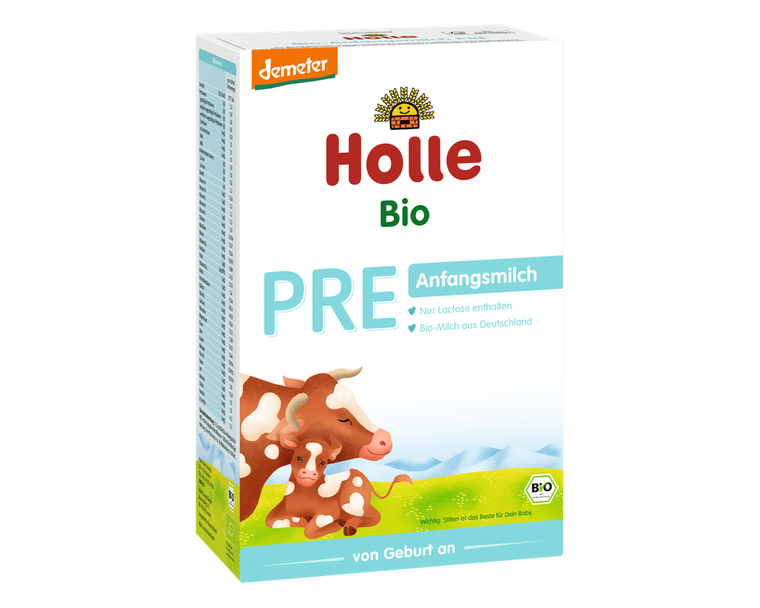
PRE Stage PRE0-6 months

Organic cow milk formula

Holle PRE

from$19.95 / box
Details

What parents say

Verified reviews, by real parents

4.8/ 5 Rated 4.8 out of 5
  • “Nothing to pay at customs.”
  • “Faster than my pharmacy refills.”
  • “Dates a full year out.”
  • “From colicky to calm.”
  • “The English guide made switching easy.”
  • “Both of my babies have done excellent on it.”
365 reviews

Answers, instantly

Every answer, one search away

Type what you're wondering about — the FAQ finds it before you finish.

15 answers

Only showing answers about Holle Formulas.

What’s the difference between Holle PRE and Holle Stage 1?

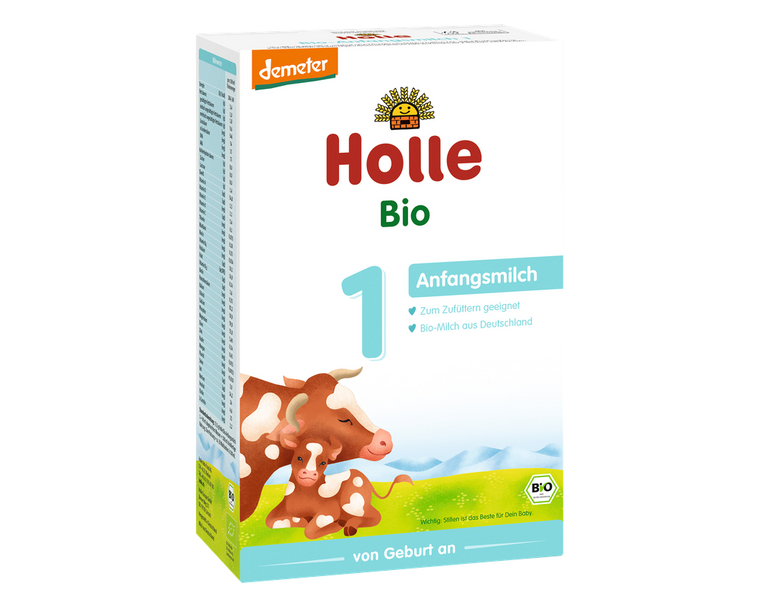
Holle PRE and Stage 1 contain the same ingredients, but Stage 1 has a higher nutritional value per serving and is more filling. Holle PRE is a great choice for newborns, while Stage 1 can be a good option when your baby’s appetite is growing and they need a little more from each bottle.

What do PRE, Stage 1, 2 and 3 mean on German formula?

German formulas are named by stage. PRE and Stage 1 are made for babies from birth and can be their only source of nutrition. In Germany the difference between the two is usually starch: PRE contains none, while many Stage 1 formulas add some for a creamier, more filling feed.

Stage 2 (from 6 months) and Stage 3 (from 10 months) are made to go alongside solid foods, and toddler milks such as 1+ or Stage 4 follow from 12 months to complement a balanced diet.

Should my toddler drink milk from a bottle or a cup?

From the first birthday, milk is best offered in a cup. Little ones love drinking like the grown-ups, and it’s kinder to their teeth: sucking on a bottle for long stretches — as a comforter or to fall asleep — can cause tooth decay. You can start practicing with a cup from about 8 months.

If your toddler still needs milk at night during growth spurts, that’s fine; just try to cover most of their needs during the day and keep up with tooth brushing.

When should I switch to the next Holle formula stage?

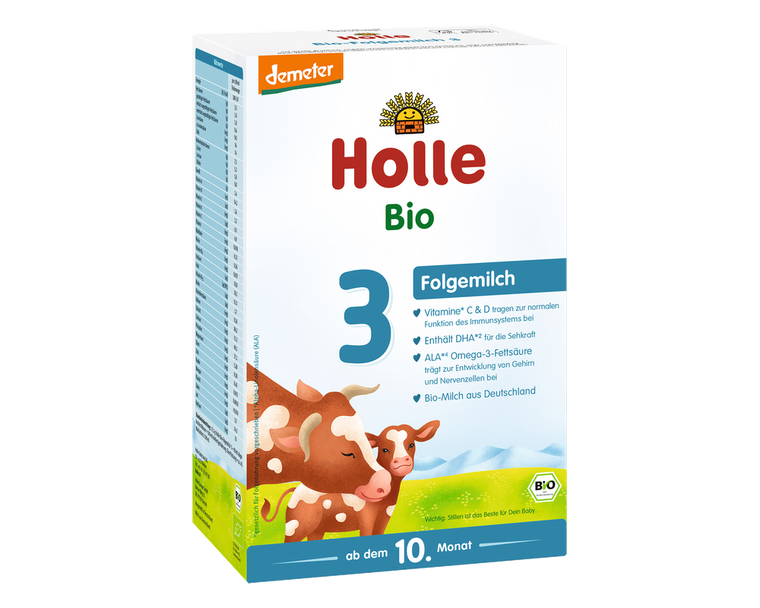
Holle Stage 2 is the next step after Holle PRE or Stage 1, and Holle Stage 3 follows Stage 2 from 10 months. The switch doesn't need to happen exactly at 6 or 10 months: if your baby's appetite is growing and the usual bottle no longer seems filling enough, it may be the right time. Switch slowly, replacing one bottle at a time.

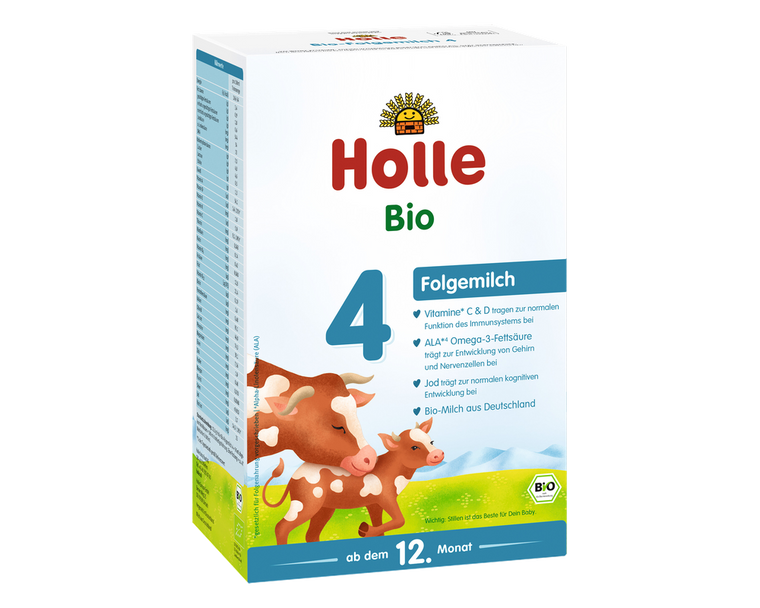
Holle Stage 4 is the toddler milk from 12 months, with the familiar creamy taste of Stage 3.

Can I combine HiPP or Holle formula with breastfeeding?

Yes. These formulas can be used from birth as your baby's only source of nutrition or alongside breastfeeding.

Why is DHA important for babies?

DHA (docosahexaenoic acid) is an omega-3 fatty acid that plays an important role in a baby’s early development.

During the first months and years of life, a baby’s brain, eyes, and nervous system develop very rapidly. DHA is a key building block of the brain and the retina (the part of the eye responsible for vision). Because of this, it is especially important for normal brain and visual development.

Babies naturally receive DHA through breast milk, depending on the mother’s diet, or through infant formula that is enriched with DHA. Since babies cannot produce enough DHA on their own, they rely on these external sources.

In short: DHA supports healthy brain development and vision in early life, which is why it is required by law in all infant formula in the EU.

Why is DHA important for toddlers?

DHA (docosahexaenoic acid) is an omega-3 fatty acid that helps support your toddler’s brain and eye development.

During the toddler years, your child’s brain is still growing quickly and learning new skills every day — like talking, moving, and problem-solving. DHA is an important building block for brain cells and also supports healthy vision.

Toddlers get DHA from foods like fish, eggs, or from DHA-enriched foods and formulas designed for young children. Since the body can only make very small amounts of DHA, regular intake through diet is important.

In short: DHA supports healthy brain development, learning, and vision during the toddler years.

Why is iron important for toddlers?

Iron is an essential nutrient that supports healthy growth and development during the toddler years. It helps the body produce hemoglobin, which carries oxygen to cells throughout the body. Iron also plays an important role in brain development, learning, memory, and immune function. Because toddlers grow rapidly, they need enough iron in their diet to support their increasing nutritional needs.

By offering a toddler milk fortified with iron as part of a balanced diet, parents can help ensure their little one gets enough iron every day.

What is Demeter cow milk?

Demeter is one of the highest standards for organic farming, going beyond EU organic requirements in several areas. Holle’s Demeter cow milk comes from farms that follow strict biodynamic farming practices, with higher standards for animal welfare, soil health, and sustainable farming. For example, Demeter farms have stricter rules around how animals are raised and fed and place a strong focus on maintaining healthy, living soil.

Why does Holle use DHA from algae instead of fish?

Holle uses plant-based DHA from algae, a sustainable source of the essential omega-3 fatty acid DHA your baby needs for normal brain and eye development. Unlike fish-derived DHA, algae-based DHA comes directly from the original source of DHA in the marine food chain and does not require fish to be harvested. It’s a clean, vegetarian-friendly choice with a lower impact on marine ecosystems.

Show 5 more questions

Do Holle cow milk formulas contain probiotics and prebiotics?

No, Holle cow milk formulas do not contain prebiotics or probiotics. Holle takes a simple, minimalist approach to baby formula, with a short ingredient list and only carefully selected ingredients. Instead of adding prebiotics and probiotics, Holle keeps the formula close to its essential ingredients.

Do Holle cow milk formulas contain corn syrup?

No, Holle cow milk formulas do not contain corn syrup!

In fact, in the European Union, infant and toddler formulas are tightly regulated, and corn syrup (or corn syrup solids) is not permitted as a carbohydrate source in infant nutrition in the way it is commonly used in some US formulas.

Which Holle formulas contain starch and maltodextrin?

Holle PRE and Holle Stage 1 contain neither starch nor maltodextrin — lactose is their only carbohydrate.

Holle Stage 2, Stage 3 and Stage 4 add gentle organic starch and maltodextrin to the lactose. This gives them a creamier texture that keeps growing babies full for longer.

Which HiPP and Holle formulas are made without palm oil?

HiPP PUR — PRE, Stage 1, Stage 2, Stage 3 and Toddler Milk — is made without palm oil: it uses whole milk and keeps its natural milk fats instead.

HiPP Combiotik, HiPP HA, HiPP Goat, HiPP Comfort, HiPP Anti-Reflux and the Holle formulas contain palm oil as part of their vegetable oil blend. The ingredient list on each product page shows the exact oils.

Which HiPP and Holle formulas are soy-free?

HiPP Combiotik, HiPP HA, HiPP Goat, HiPP Comfort and HiPP Anti-Reflux are made without soy, and the Holle formulas list no soy among their allergens. Only HiPP PUR contains soy, as soy lecithin.

Still stuck? Message our team — real people, usually within a day.