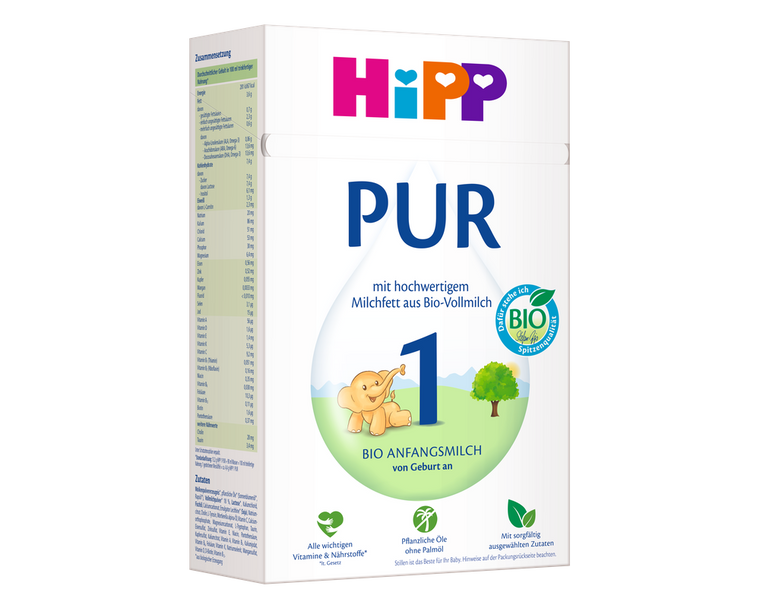
HiPP Formulas

HiPP is one of Europe's leading organic baby formula brands, trusted by parents around the world. Its formulas are made in Germany under strict EU organic standards, non-GMO and with no corn syrup. They offer gentle, easy-to-digest nutrition for every stage, from newborn to toddler.

HiPP Formulas

Products

What parents say

Verified reviews, by real parents

4.8/ 5 Rated 4.8 out of 5
  • “Nothing to pay at customs.”
  • “Faster than my pharmacy refills.”
  • “Dates a full year out.”
  • “From colicky to calm.”
  • “The English guide made switching easy.”
  • “Both of my babies have done excellent on it.”
365 reviews

Answers, instantly

Every answer, one search away

Type what you're wondering about — the FAQ finds it before you finish.

23 answers

Only showing answers about HiPP Formulas.

Which version of HiPP formula do you sell?

We only sell the German HiPP version of HiPP formulas.

Good to know: HiPP products are available in different country versions (such as German, Dutch, or UK versions), mainly due to different local labeling and packaging requirements. However, all HiPP formulas are made under the same strict EU organic standards and regulatory controls, ensuring consistent safety, ingredient quality, and organic certification across all markets.

Important: All HiPP formulas are produced in the same manufacturing sites in Germany, and all production follows the same high-quality EU organic certification system and controls, regardless of whether the product is sold as the German, Dutch, or UK version.

What’s the difference between HiPP German Combiotik and HiPP Dutch Combiotik?

The German and Dutch HiPP Combiotik formulas differ only in two ways: packaging and starch content.

Packaging: The Dutch formula comes in 800g metal cans, while the German formula is packaged in 600g sustainable cartons with a protective foil pouch to help keep the formula fresh.

Starch content: The Dutch version is always starch-free, while the German range includes both formulas with and without starch, depending on the stage.

If you are looking for a HiPP German Combiotik formula that is equivalent to the HiPP Dutch Combiotik range, the following German formulas are starch-free and therefore the same as their Dutch counterparts:

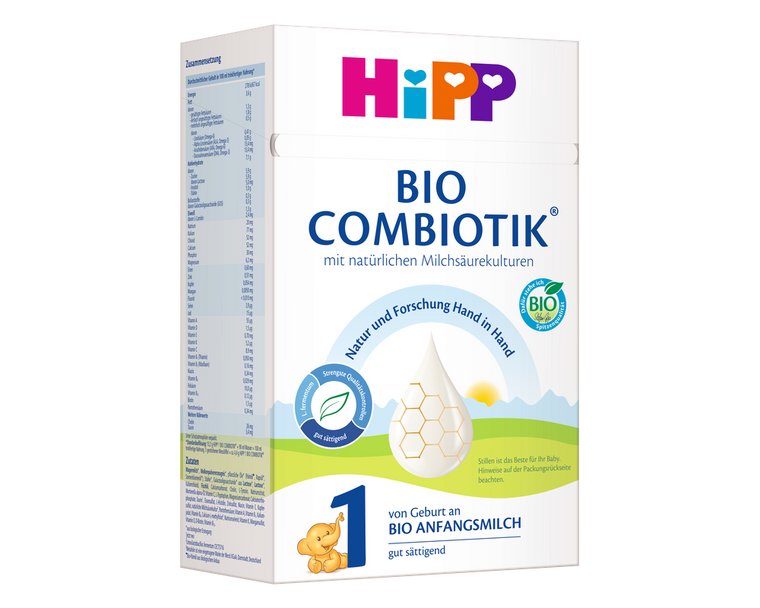
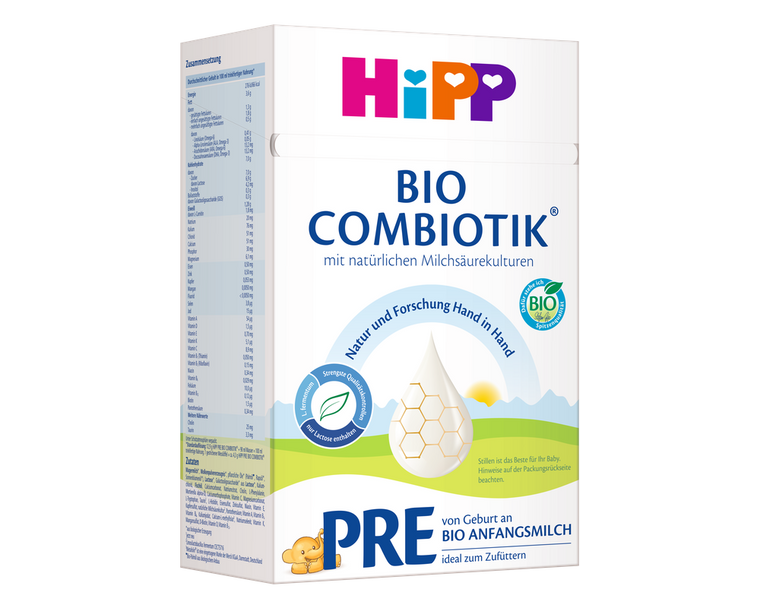
- HiPP German Combiotik PRE for 0-6 months is the same like HiPP Dutch Stage 1

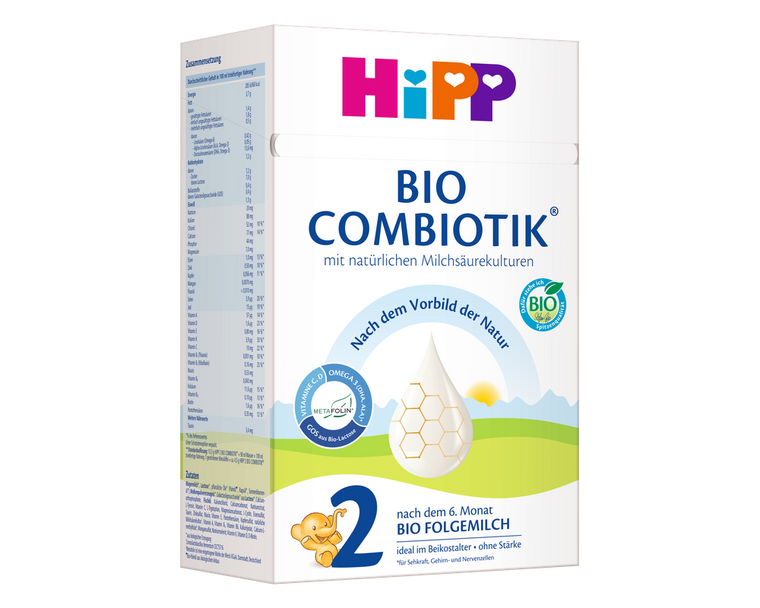
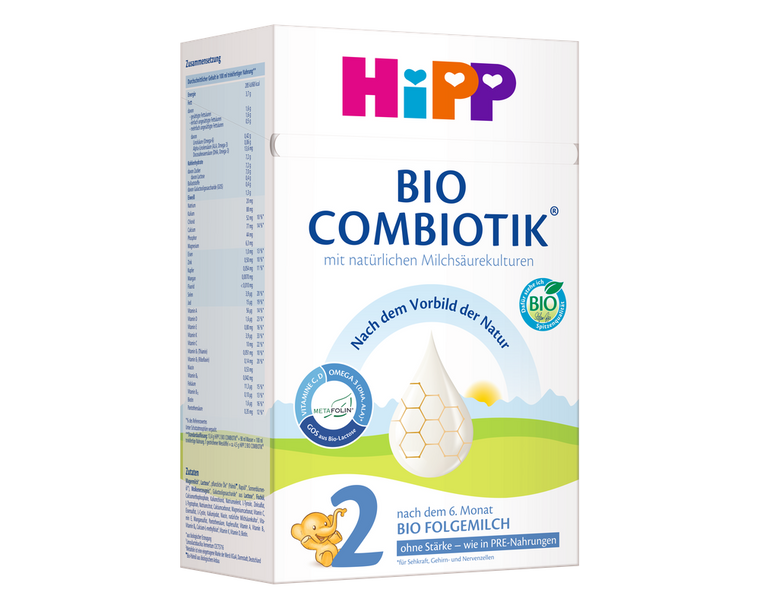
- HiPP German No Starch Combiotik Stage 2 for 6+ months is the same like HiPP Dutch Stage 2

How do I prepare a bottle of HiPP formula?

Boil fresh drinking water and let it cool to about 40 to 50 °C (104 to 122 °F). Pour the amount of water given in the feeding table into a clean bottle, add the matching number of scoops — each filled loosely and leveled off — then close the bottle and shake it vigorously.

Let the bottle cool to drinking temperature, about 37 °C (98.6 °F), and check it on the inside of your wrist before feeding. Close the inner bag well after use, for example with a clip. The amounts are in the feeding table on the pack and in the English feeding guide that comes with every Little Formula order.

Why should the water for HiPP formula cool to 40–50 °C first?

At about 40 to 50 °C (104 to 122 °F), the powder dissolves well while heat-sensitive vitamins stay protected — and so do the natural lactic acid cultures in HiPP formulas with probiotics (Combiotik, HA, Comfort and Anti-Reflux). Water that is too hot would damage them.

To cool boiled water faster, stand the bottle or a measuring jug in a cold water bath for a few minutes.

What do PRE, Stage 1, 2 and 3 mean on German formula?

German formulas are named by stage. PRE and Stage 1 are made for babies from birth and can be their only source of nutrition. In Germany the difference between the two is usually starch: PRE contains none, while many Stage 1 formulas add some for a creamier, more filling feed.

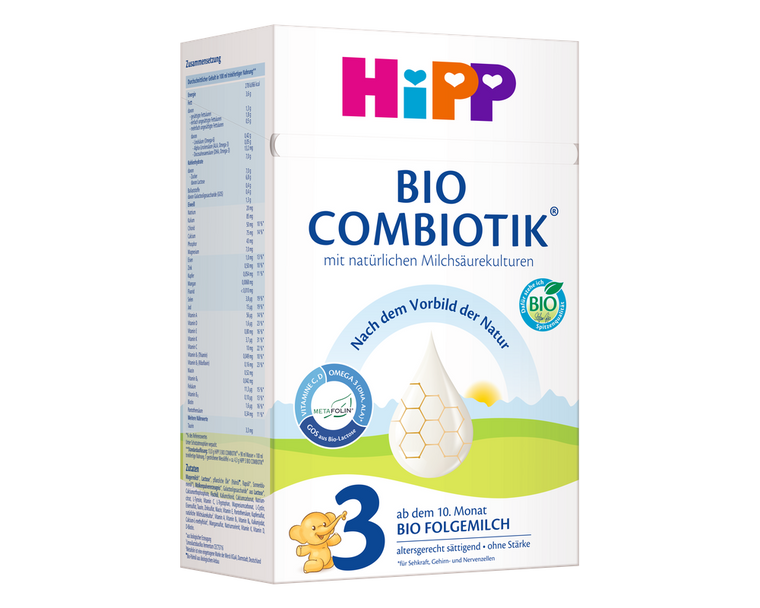
Stage 2 (from 6 months) and Stage 3 (from 10 months) are made to go alongside solid foods, and toddler milks such as 1+ or Stage 4 follow from 12 months to complement a balanced diet.

When should my baby move to the next HiPP Combiotik stage?

The switch doesn't need to happen exactly at 6 or 10 months: if your baby's appetite is growing and the usual bottle no longer seems filling enough, it may be the right time. Switch slowly, replacing one bottle at a time.

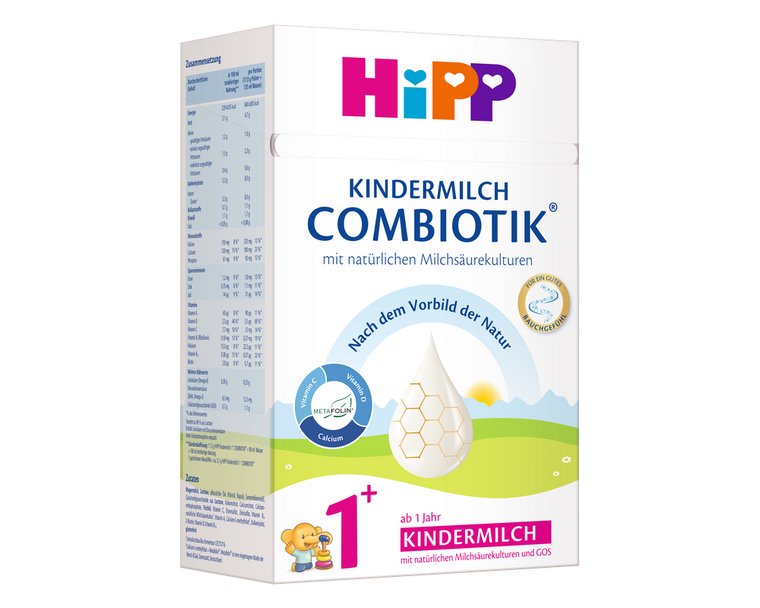
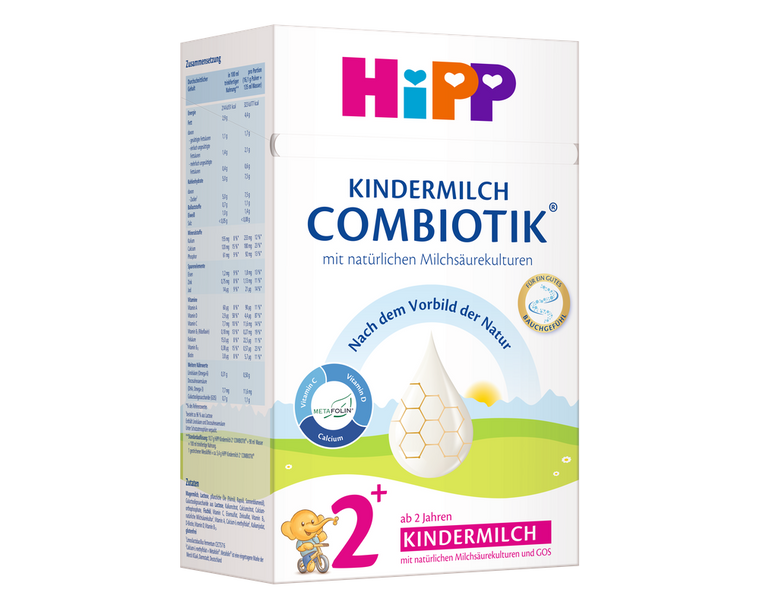
After HiPP Combiotik PRE comes HiPP No Starch Combiotik Stage 2, which keeps the lighter, starch-free texture. After Combiotik Stage 1 comes Combiotik Stage 2 with the same creamy texture, then Stage 3 from 10 months. Stage 3 and No Starch Stage 2 also work as toddler milk; Combiotik 1+ and 2+ are made for toddlers from 1 and 2 years.

What's the difference between HiPP PUR and HiPP Combiotik?

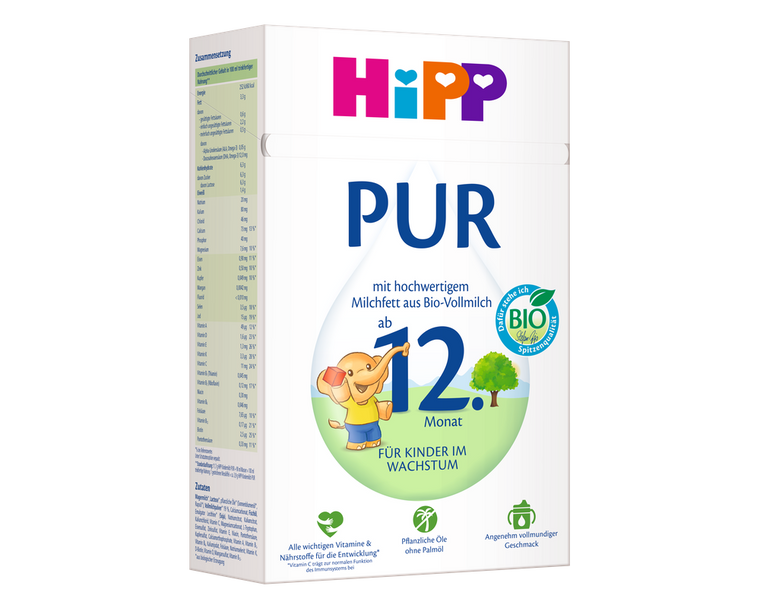
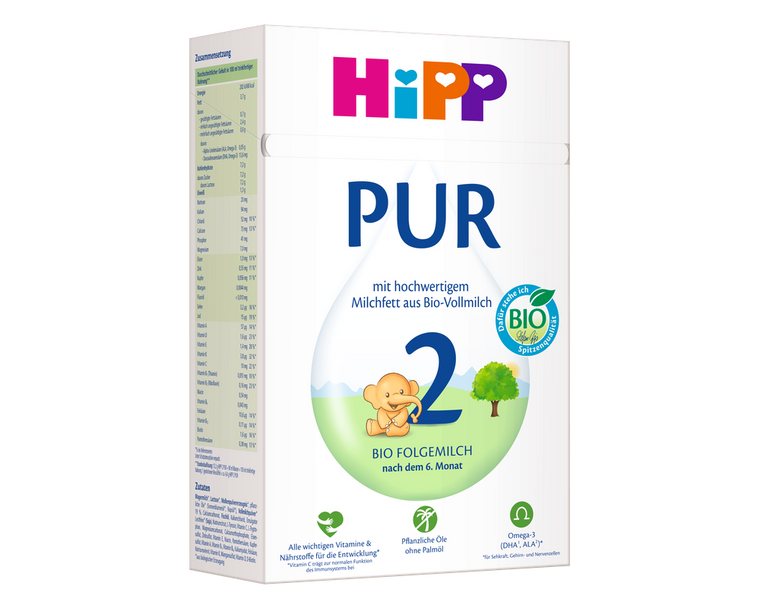
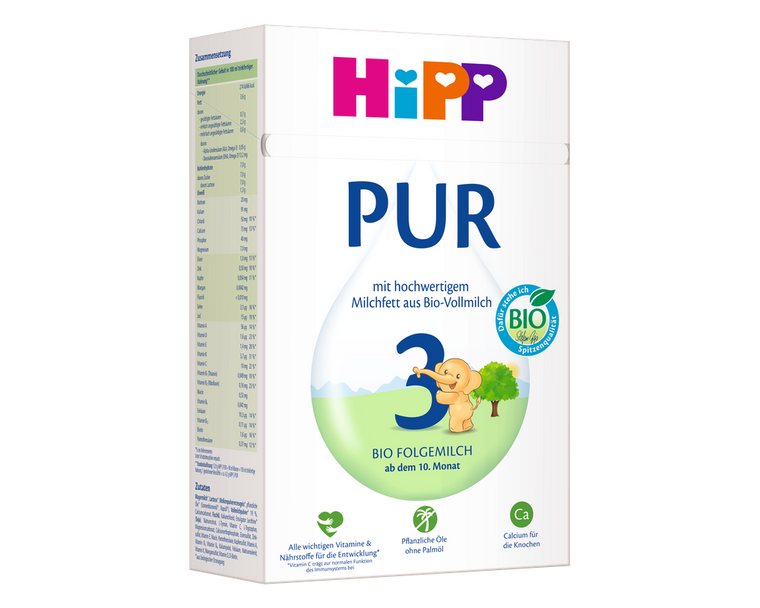
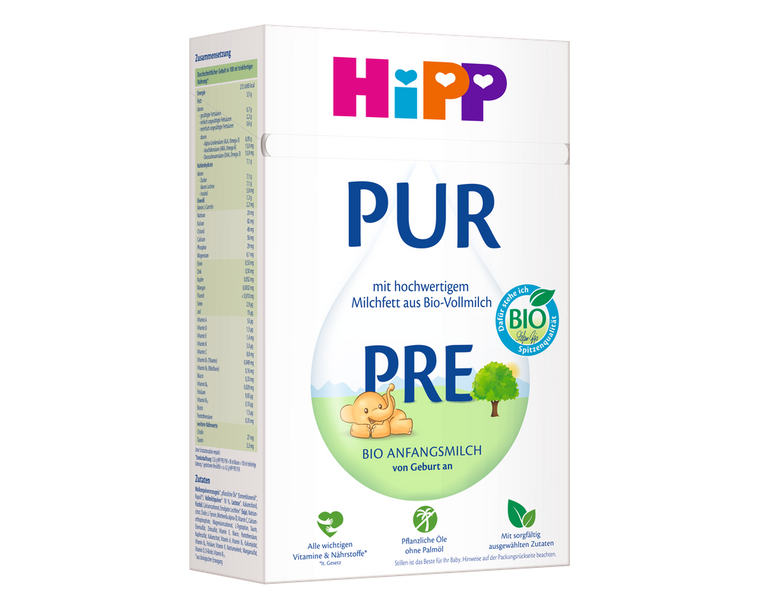
HiPP PUR is made with whole milk from grass-fed cows and keeps its natural milk fats. It contains no palm oil and no starch, and lactose is its only carbohydrate.

HiPP Combiotik is built around the Combiotik blend of prebiotics, probiotics and natural folate (Metafolin®), and its vegetable oil blend includes palm oil. Combiotik PRE and No Starch Stage 2 are starch-free, while Combiotik Stage 1, 2 and 3 contain mild starch for a creamier, more filling texture.

Why is it important to measure HiPP formula exactly?

The right ratio of powder to water matters for both nutrition and digestion: too much or too little powder can make the formula harder to digest and may contribute to constipation. Always use the scoop from the pack, fill it loosely and level it off, for example with the back of a knife — don’t press the powder down.

Use exactly the amount of boiled water the feeding table gives for the number of scoops.

Can I combine HiPP or Holle formula with breastfeeding?

Yes. These formulas can be used from birth as your baby's only source of nutrition or alongside breastfeeding.

Can heat during delivery or travel damage HiPP formula or porridge?

No. Formula powder and HiPP powdered porridges are not sensitive to heat in transit.

At home, store packs dry, out of the sun and below 25 °C (77 °F). In very hot weather you can keep unopened packs in the fridge — but never opened ones, as the powder can get damp there.

Show 10 more questions

What does "Combiotik" stand for?

The term "Combiotik" refers to the beneficial combination of natural lactic acid cultures (probiotics), valuable fibers (prebiotics), and the natural folate called Metafolin. Metafolin is a patented ingredient that is more easily absorbed than the synthetic folic acid commonly found in US formulas. These nutrients work together to support a healthy gut flora and strengthen the immune system.

Do HiPP formulas contain corn syrup?

No, HiPP formulas do not contain corn syrup!

In fact, in the European Union, infant and toddler formulas are tightly regulated, and corn syrup (or corn syrup solids) is not permitted as a carbohydrate source in infant nutrition in the way it is commonly used in some US formulas.

What are the benefits of whole milk baby formula?

Whole milk fat provides a natural source of energy that supports healthy growth and development. Because whole milk fat is less processed than some skim-milk–based formulations, it can create a creamier texture that many babies accept well. This can be helpful for feeding comfort and satiety.

Unlike many standard formulas made with skimmed milk, whole milk–based formulas retain more of the natural milk fats found in whole milk. This gives them a fat profile that is closer to breast milk in structure and composition. As a result, they require fewer added vegetable oils to achieve a balanced fat blend and are thus closer to breast milk.

What is Metafolin® and how can I find Metafolin® on the ingredient list?

Metafolin® is a natural form of folate and a patented ingredient in HiPP Combiotik formulas that is more easily absorbed than the synthetic folic acid commonly found in US formulas. Folate is vital for babies because it supports healthy cell growth and development, especially in the brain and nervous system, helping to ensure their strong start in life.

Look for "L-methylfolate" among the vitamins (on German HiPP packs: „L-Methylfolat“). That's Metafolin®, the active form of folate your baby's body can use right away. The brand name itself isn't used in ingredient lists.

Why is DHA important for babies?

DHA (docosahexaenoic acid) is an omega-3 fatty acid that plays an important role in a baby’s early development.

During the first months and years of life, a baby’s brain, eyes, and nervous system develop very rapidly. DHA is a key building block of the brain and the retina (the part of the eye responsible for vision). Because of this, it is especially important for normal brain and visual development.

Babies naturally receive DHA through breast milk, depending on the mother’s diet, or through infant formula that is enriched with DHA. Since babies cannot produce enough DHA on their own, they rely on these external sources.

In short: DHA supports healthy brain development and vision in early life, which is why it is required by law in all infant formula in the EU.

Which HiPP and Holle formulas are made without palm oil?

HiPP PUR — PRE, Stage 1, Stage 2, Stage 3 and Toddler Milk — is made without palm oil: it uses whole milk and keeps its natural milk fats instead.

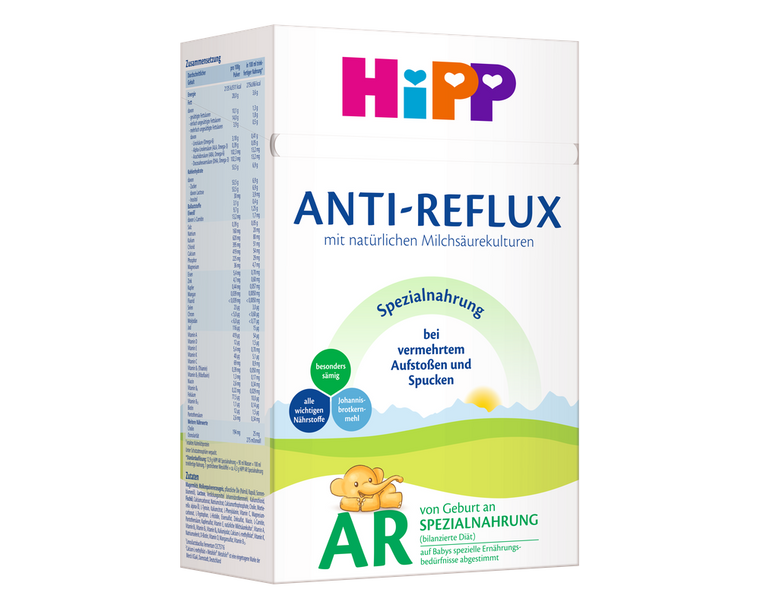
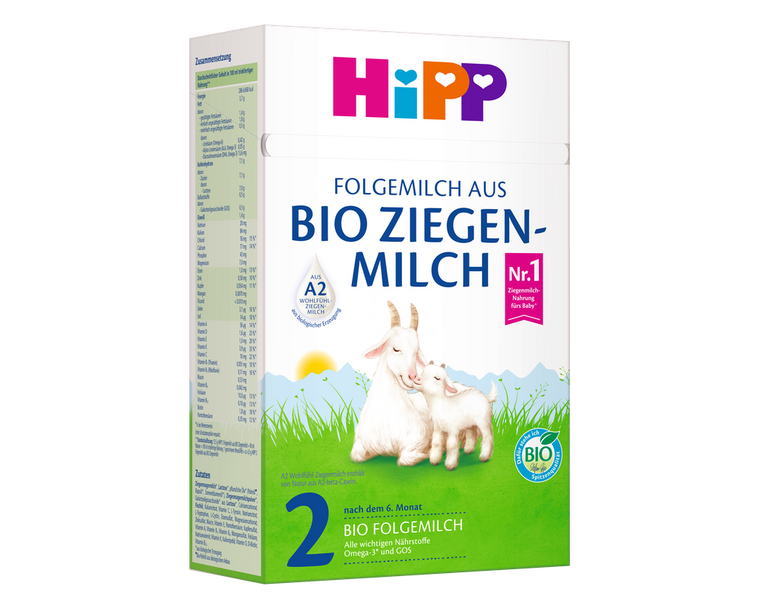
HiPP Combiotik, HiPP HA, HiPP Goat, HiPP Comfort, HiPP Anti-Reflux and the Holle formulas contain palm oil as part of their vegetable oil blend. The ingredient list on each product page shows the exact oils.

How does HiPP check the quality and safety of its formula?

Every raw material is strictly tested, and a new ingredient only goes into HiPP infant formula once its safety and benefit are scientifically proven, often in long-term clinical studies led by renowned pediatricians. For raw materials and finished formula alike, HiPP sets stricter limits than the law requires, and every pack is checked before it is sold.

What are GOS in HiPP formula?

GOS (galactooligosaccharides) are prebiotics made from lactose. They help support a healthy gut flora and comfortable digestion, and you will find them in the ingredient lists of HiPP Combiotik, HiPP HA, HiPP Goat and HiPP Comfort.

What's the difference between HiPP Comfort and HiPP HA formulas?

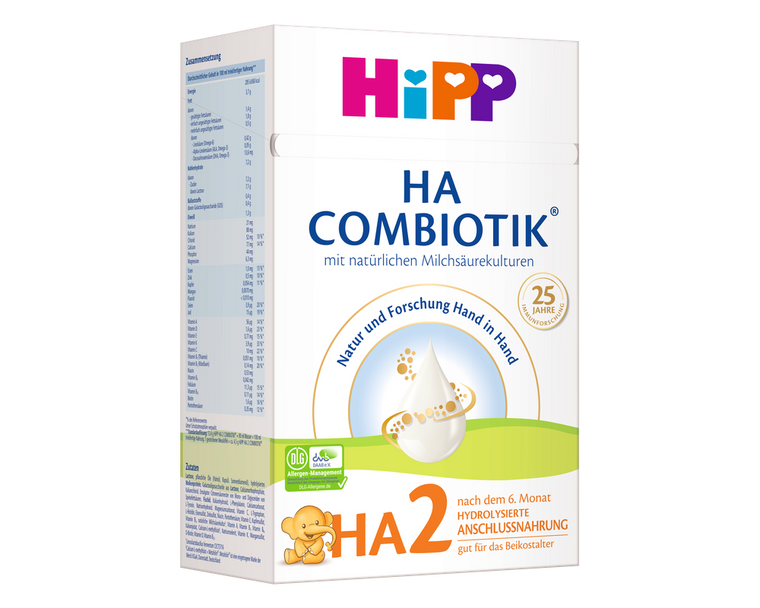
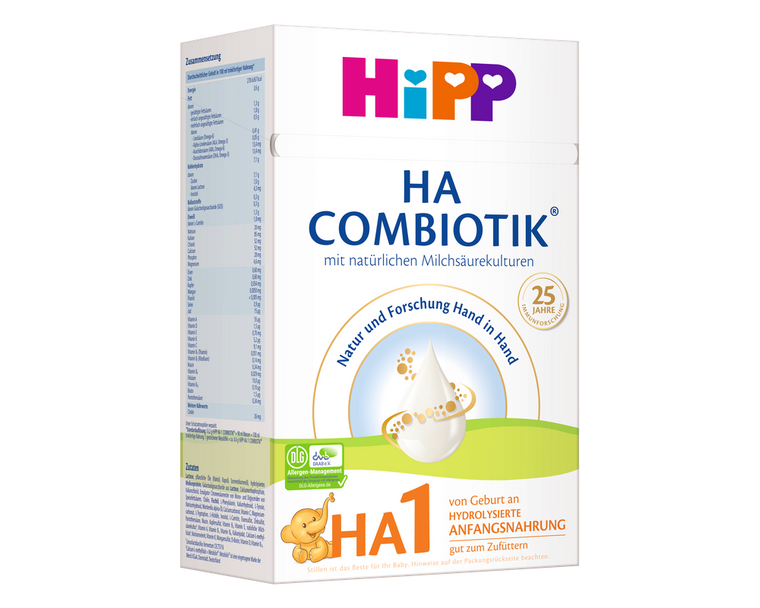
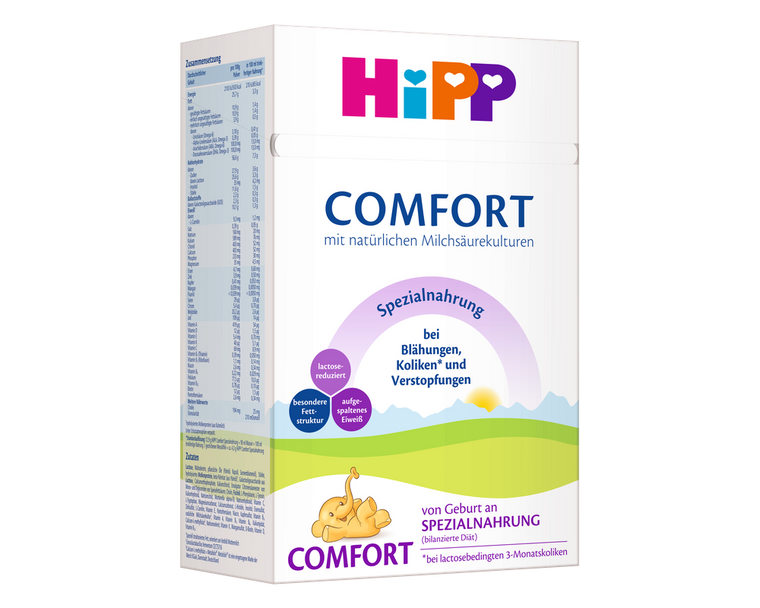
HiPP HA and HiPP Comfort formulas are both based on extensively hydrolyzed proteins. This minimizes the risk of developing allergies. The main difference between those two formulas is that the HiPP Comfort formula is additionally reduced in lactose, which helps with issues like gassiness and constipation.

HiPP Comfort is suitable for allergy-prone babies that have troubles like gassiness, constipation or colic.

Can I use HiPP PUR Whole Milk for a sensitive baby?

Yes, many parents choose HiPP PUR Whole Milk for babies with sensitive digestion.

Whole milk–based formulas are often well tolerated because they contain a natural milk fat structure that is closer to breast milk compared to skim-based formulas. This can make them feel gentler on the stomach for some babies. As a result, some infants with a sensitive digestive system may thrive better on whole milk formulas than on standard cow’s milk.

However, every baby is different and if your child has persistent digestive issues or suspected intolerance, it’s best to check with a pediatrician before making changes.

Show 3 more questions

Which HiPP and Holle formulas are soy-free?

HiPP Combiotik, HiPP HA, HiPP Goat, HiPP Comfort and HiPP Anti-Reflux are made without soy, and the Holle formulas list no soy among their allergens. Only HiPP PUR contains soy, as soy lecithin.

Do HiPP formulas contain fish oil?

Yes. All HiPP formulas contain fish oil: it is the source of their DHA, which EU law requires in infant formula, and it is listed among the allergens of every HiPP formula.

Holle formulas take their DHA from microalgae instead, if you are looking for a formula without fish oil.

Does HiPP PUR contain soy?

Yes. HiPP PUR formulas contain soy lecithin as an emulsifier, so soy is listed among their allergens, together with lactose, milk, milk products and fish oil.

Still stuck? Message our team — real people, usually within a day.